Skip to content
CAIRSPlan

For patients

Keratoconus, explained.

Most people diagnosed with keratoconus today will never need a transplant. Modern Australian treatment is staged — improve the shape of the cornea first, stabilise it, then refine residual vision. This page walks you through what the diagnosis means and what's now possible.

This is general patient information, not medical advice. CAIRSPlan is a surgical-planning resource; for assessment and treatment, see Focus Vision.

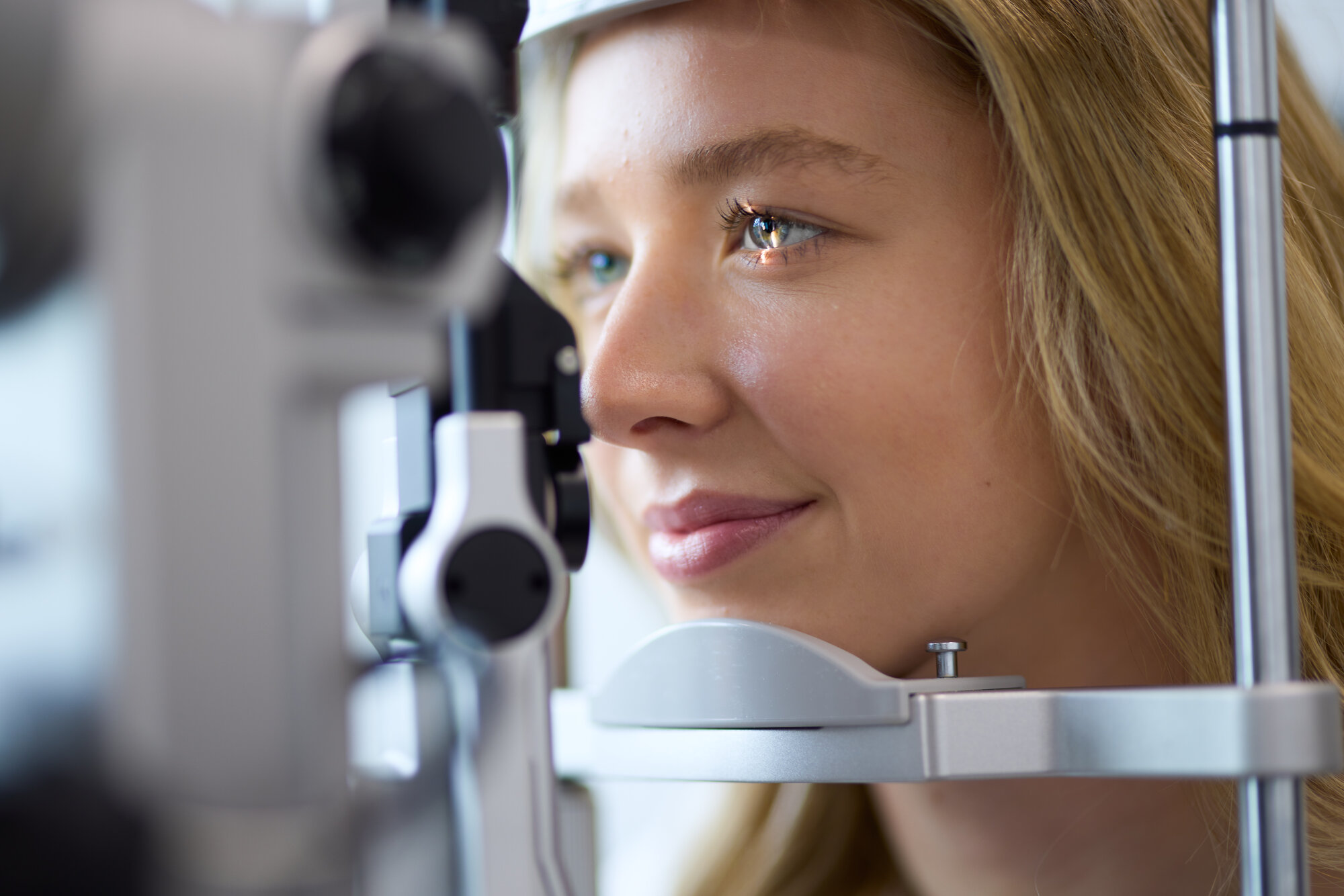
Patient receiving a slit-lamp examination

What is keratoconus?

Keratoconus (kerr-uh-toh-koh-nuss) is a progressive disorder where the front surface of the eye — the cornea — gradually thins and bulges into a cone shape. Because the cornea is responsible for most of the eye's focusing power, even small changes in its shape can significantly distort vision.

It usually appears in the teens or twenties and tends to progress most rapidly during young adulthood, then slow with age. Common early signs are a frequently changing glasses prescription, ghosting or "starbursts" around lights, and the inability to be corrected to clear vision with glasses alone.

Who gets it, and why?

Keratoconus affects roughly 1 in 2,000 people in Australia, but with modern screening it's being detected earlier and more often. It's strongly associated with three things: a family history of keratoconus, vigorous eye rubbing (especially with allergies, eczema or atopic disease), and young age at onset. Stopping eye rubbing is the single most important thing patients can do.

How it's diagnosed

Diagnosis is by corneal topography or tomography — a non-contact scan that produces a detailed map of the cornea's curvature and thickness. Most modern optometry practices in Australia have a topographer; if your prescription is changing rapidly, ask for a corneal scan.

Treatment ladder

The modern path through keratoconus.

Improve the shape, stabilise it, refine residual vision. Transplantation is reserved for the rare cases where everything else has been tried.

Before any treatment

Stop eye rubbing.

Stopping eye rubbing is the single most important thing a patient with keratoconus can do. It is the strongest avoidable driver of progression and underpins every other step of treatment.

Foundational

Eye-rubbing avoidance

  1. 01

    Reshape with CAIRS

    Improve the shape of the cornea first. Thin arc segments of donor corneal tissue are placed inside your cornea to flatten the keratoconic cone. No tissue is removed; the segments can be exchanged or removed later if your eyes evolve.

    Treatments

    CAIRS

  2. 02

    Stabilise with cross-linking

    Riboflavin drops and a few minutes of UV light strengthen the corneal collagen, halting disease progression. Indicated when there is evidence the disease is still progressing — it can be performed at the same time as CAIRS, or as a separate step.

    Treatments

    Corneal cross-linking

  3. 03

    Refine residual vision

    Remaining refractive error after CAIRS can be addressed with glasses or soft contact lenses, and many patients find their best quality of vision comes from a new glasses prescription. Scleral or rigid gas-permeable lenses are options for higher residual error. An implantable contact lens (ICL) can be helpful where the prescription is significant. Sequential topography-guided laser treatment to the cornea can also be of use in selected cases.

    Treatments

    Glasses · contacts · ICL · selected laser

  4. 04

    Transplant — only if needed

    Reserved for the small minority who progress despite the above.

    Treatments

    DALK · PK

CAIRS, in plain English

Corneal Allogenic Intrastromal Ring Segments (CAIRS) is a procedure where thin arc-shaped pieces of donor corneal tissue are placed inside your cornea to flatten the cone of keratoconus. It's day-surgery, sutureless, and recovery is usually fast.

  • It uses biological tissue — donor cornea, not plastic — so the body integrates it cleanly.
  • It's reversible. Segments can be exchanged or removed straightforwardly if your eyes evolve.
  • It doesn't remove any of your own cornea — important if you may need other procedures down the track.
  • It can be combined with cross-linking when there is evidence the disease is still progressing.

Dr David Gunn and Dr Brendan Cronin performed the first CAIRS procedures in Australia in May 2021 and have published the Brisbane nomogram — a planning chart for the procedure — in Clinical & Experimental Ophthalmology.

Common questions

Is keratoconus a serious condition?

It can be — untreated, keratoconus can progress to severe vision loss requiring corneal transplantation. With early diagnosis and modern treatment, the vast majority of patients in Australia today never need a transplant and retain excellent vision long-term.

Will I go blind?

No. Even in advanced disease, vision can almost always be restored — by combinations of CAIRS, cross-linking, contact lenses or, rarely, transplantation. The earlier the diagnosis, the simpler the treatment.

How is keratoconus diagnosed?

By corneal topography or tomography — a non-contact scan that maps the curvature and thickness of your cornea. Optometrists and ophthalmologists with the right equipment can detect it early, often before vision is significantly affected.

I rub my eyes a lot. Should I stop?

Yes. Eye rubbing is the strongest avoidable factor in keratoconus progression. If allergies or dry eye are driving the rubbing, treat those underlying causes.

What is CAIRS?

Corneal Allogenic Intrastromal Ring Segments — thin arc segments of donor corneal tissue placed inside the cornea to flatten the keratoconic cone. Unlike older synthetic ring segments, CAIRS uses biological tissue, can be exchanged or removed if needed, and may have a lower rate of the complications seen with synthetic implants.

Can I have CAIRS if I have already had cross-linking?

Yes. There is some clinical evidence that the effect of CAIRS may be reduced in patients who have already had cross-linking, but results still show significant improvements in shape and vision.

I want to be assessed for CAIRS or keratoconus treatment. What now?

Book a consultation with Focus Vision in Brisbane. The clinic accepts both self-referrals and GP/optometrist referrals. A consultation involves a full corneal scan and a tailored discussion of which treatment path suits your eyes.

Want to be assessed?

Book a consultation at Focus Vision in Brisbane. Self-referrals and GP/optometrist referrals are both welcome.